


What is a Menstrual Cycle?
A menstrual cycle is the monthly hormonal process your body goes through to prepare for a possible pregnancy. It’s counted from the first day of one period to the first day of the next, and involves coordinated changes in the ovaries and the uterus, driven by shifting levels of hormones like oestrogen and progesterone.
While many people think of the “cycle” as just the days of bleeding, the period itself is only one part of a much longer process. Across the month, your body moves through four distinct phases, menstrual, follicular, ovulation, and luteal – each with its own hormonal pattern and effect on your body, mood, and energy.
A typical menstrual cycle lasts between 21 and 35 days, with 28 days often used as an average, though very few people are perfectly “textbook.” Cycle length, symptoms, and flow can all vary from person to person, and even from month to month for the same person.
In clinic, this is often one of the first things we clarify with patients – the cycle isn’t just the days of bleeding, it’s a month-long hormonal story.
Understanding what a menstrual cycle actually is, beyond “getting your period”, is the first step to understanding your own body, spotting when something might be off, and using that knowledge for things like contraception or planning a pregnancy
Why is the Menstrual Cycle Important?
A menstrual cycle is more than your ‘period’ or ‘that time of the month’. Understanding the full period cycle, and how it affects your body, mood, and energy – is one of the most empowering things a woman can do for her health. Being in tune with your body is important so that if things go wrong, you know to to seek help.
The menstrual cycle is also important to sexual health, as tracking it and being aware of fertile days can be used as a contraceptive method and to plan conception.
The human menstrual cycle involves rhythmic changes in two organs: the ovary and the uterus. There are 4 distinct phases in one menstrual cycle.
Menstrual Cycle Phases (Women’s cycle phases)
The women’s cycle phases refer to the four hormonal stages of the menstrual cycle that prepare the body for possible pregnancy each month.The four phases are:- Menstrual phase (period bleeding)
- Follicular phase (post-period rebuilding phase)
- Ovulation phase (fertile window)
- Luteal phase (pre-period phase)
Menstruation – The Periods [Days 1-7]
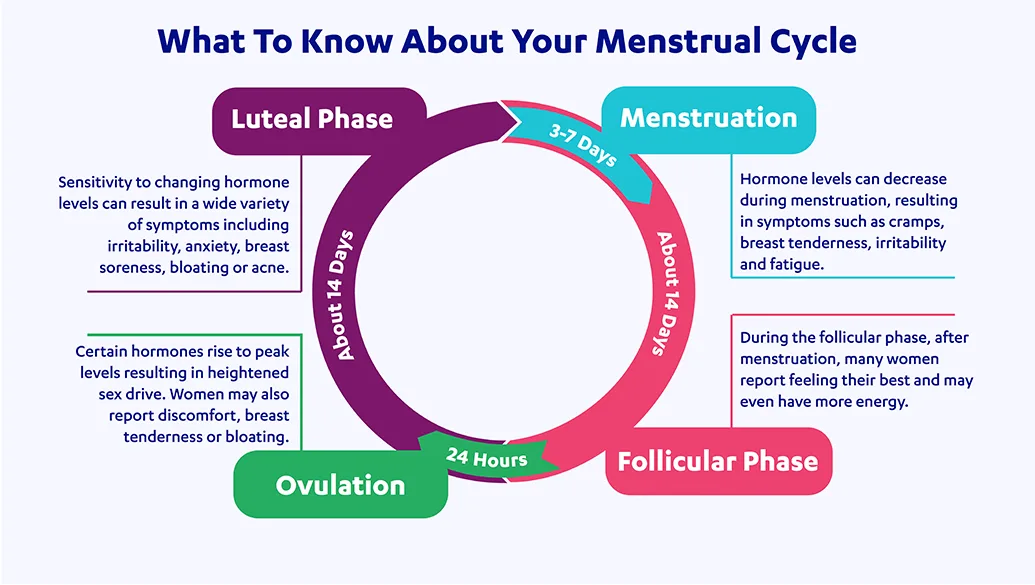
The first phase of the menstrual cycle is menstruation, lasting 3–7 days. During this phase, the uterine lining sheds, causing bleeding. Many women experience cramps, mood changes, and fatigue during this phase.The Follicular Phase – Before Ovulation Phase ( or The After Period Phase) [Days 1-14]
The follicular phase is often called the after period phase — it begins the moment menstruation ends and continues until ovulation. This is the phase before ovulation, during which your ovaries are preparing for fertilisation. Hormones like oestrogen begin to rise, and the body gets ready for a potential pregnancy.
It’s also one of the most noticeable phases when it comes to follicular phase feelings — many women describe a shift in mood, energy, and mental clarity that makes this stretch of the cycle feel distinctly different from the days just before or during a period.
Ovulation – The Time a Woman is Most Likely to Conceive [Day 14]
Ovulation is when an egg is released. This is the most fertile period of your female menstrual cycle. Knowing your fertile window is essential for planning conception or understanding your series of 7 days cycle around ovulation.The Luteal Phase – After Ovulation [Days 15-28]
After ovulation, the luteal phase prepares the uterus for a possible pregnancy. Symptoms can include bloating, breast tenderness, or mood changes — all part of the period cycle phases and symptoms.Symptoms of Follicular Phase
The symptoms of follicular phase vary from woman to woman, but this phase is often associated with a noticeable shift in how the body feels after menstruation ends. As oestrogen levels begin to rise, many women report both physical and emotional changes that reflect increased hormonal activity and energy rebuilding in the body.Common symptoms of the follicular phase may include:- Gradual increase in energy levels after your period ends
- Improved mood and emotional stability
- Enhanced focus and mental clarity
- Reduced bloating and menstrual discomfort
- Clearer skin for some individuals
- Changes in cervical mucus (becoming more clear, slippery, and fertile)
What Does a Healthy Menstrual Cycle Look Like?
When it comes to menstrual cycles, there is a wide range of what is healthy. The length of the period cycle is 21 to 35 days, with most averaging 26 to 28 days. The duration of the secretory phase is relatively constant, averaging 14 days.Some people have very consistent menstrual cycles, whilst others will notice variation in the length of their cycles or periods.Periods lasting more than 7 days or needing more than 6 tampons/pads per day can be considered heavy bleeding. It can also be normal to skip periods at times.A 26-day cycle is perfectly normal, and tracking your 26-day period cycle can help you predict ovulation, manage symptoms, and understand your hormonal patterns.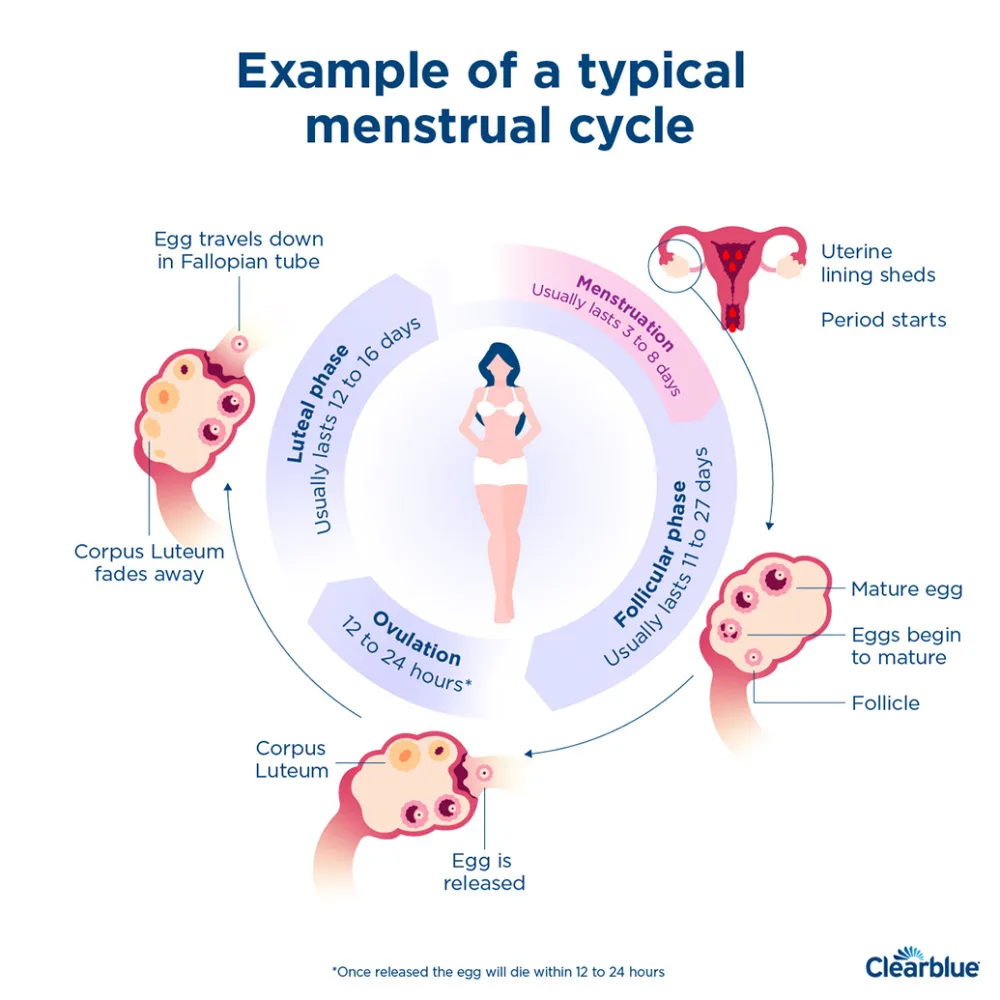
Menstrual Cycle Phases and Energy Levels
One of the most practical reasons to understand your menstrual cycle is what it can tell you about your energy levels throughout your cycle. Menstrual cycle phases and energy levels are closely linked — and once you understand the pattern, you can work with your body rather than against it.
Here’s how energy typically shifts across the cycle:
- Menstrual phase: Energy is often at its lowest. Rest, gentle movement, and self-care are beneficial during this time.
- Follicular phase: Energy begins to rebuild. Many women feel more motivated, physically capable, and mentally sharp during this phase — making it a good time for new projects, exercise, and social commitments.
- Ovulation: Energy typically peaks. This is often when women feel their most confident and outgoing.
- Luteal phase: Energy gradually declines, particularly in the lead-up to menstruation. Slowing down, prioritising sleep, and managing stress become more important.
Understanding how you feel at different stages of your menstrual cycle can help you plan your work, exercise, social life, and self-care in a way that genuinely supports your wellbeing.
“When my patients start tracking their cycle, they’re often surprised by how much it explains – their energy, their mood, their motivation. It’s not ‘just hormones’, it’s information.” — Dr Sugandha Kumar, Obstetrician and Gynaecologist, MelbourneFollicular Phase Pain – Is It Normal?
While the follicular phase is generally associated with improving wellbeing, some women do experience follicular phase pain. This can include mild pelvic discomfort or a sensation around the ovaries as follicles develop and oestrogen rises. Some women also notice a sharp or cramping sensation at the time of ovulation itself, known as Mittelschmerz (middle pain).
Mild discomfort in this phase is usually normal, but persistent or severe pain should always be discussed with your doctor, as it can sometimes indicate conditions such as endometriosis or ovarian cysts.
What is a Fertile Window?
Your fertile window is the time in your menstrual cycle when you can get pregnant. The day before ovulation and the day you ovulate are known as your ‘peak fertile days’, but since sperm can survive for up to 5 days inside a woman’s body, you are also fertile on the few days before ovulation. Once an egg is released it will survive for up to 24 hours, so you remain fertile for this period too.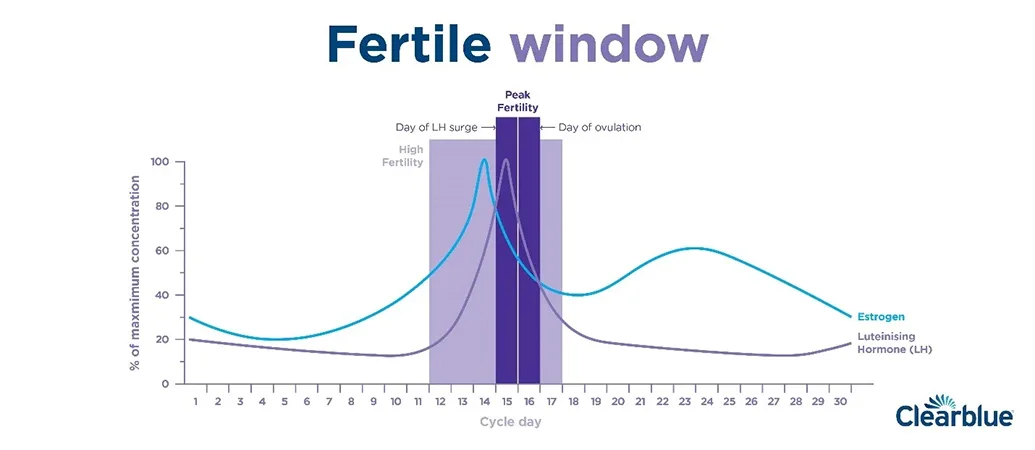
Irregular Menstrual Cycles
Cycle length varies between women, even the same woman may have a variation from month to month. So variable cycles and irregular periods are more common than one may think and are actually perfectly normal.Extreme irregularity in menstrual cycles could point to an underlying medical reason that could also affect fertility.Other causes of irregular or missed periods could include:- Underlying reproductive disorder, like polycystic ovarian syndrome (PCOS)
- Obesity
- Perimenopause
- An eating disorder
- Too much exercise
- A thyroid disorder
Life and the Menstrual Cycle
Life doesn’t have to stop for periods. But suggesting we should “keep going” regardless and pretend like our period is not happening is a linear, straight-line approach to what is a cyclic process. Understanding your body, your menstrual cycle and your hormonal changes empowers you to make decisions and lifestyle choices that are right for you.Who can I talk to for advice?
Our Women’s Health specialists at Create Health are always available for advice and would love to listen to you and discuss how we can assist you. We are experts in this area and are here to help.Contact us by ringing 9873 6767 or by writing to info@create-health.com.au.Frequently Asked Questions
How do you feel during the follicular phase? Most women notice rising energy, better mood, and sharper focus as oestrogen climbs during this phase. It’s often described as the “feel-good” stretch of the cycle — many people feel more sociable, motivated, and physically capable compared to the days just before or during their period.
Can I get pregnant if I am in my follicular phase? Yes, particularly in the days leading up to ovulation, which falls at the end of the follicular phase. Sperm can survive in the body for up to 5 days, so if you have sex in the final days of your follicular phase, conception can still happen once ovulation occurs.
What causes a short follicular phase? A short follicular phase (under about 10 days) can happen naturally, but it’s also linked to factors like ageing/approaching perimenopause, high stress, low body weight, over-exercising, or thyroid issues. A consistently short follicular phase is worth mentioning to your doctor, as it can sometimes affect fertility.
Is it normal to feel ovulation pain? Yes, mild pain or twinges around ovulation are common and are known as Mittelschmerz. It’s usually short-lived and felt on one side of the lower abdomen. However, pain that is severe, persistent, or accompanied by other symptoms should be checked by a doctor, as it can occasionally point to conditions like endometriosis or ovarian cysts.
What’s the best type of exercise during the follicular phase? Because energy and oestrogen are rising during this phase, many women find it a good time for higher-intensity or strength-based exercise. That said, this isn’t a strict rule — the most important thing is to listen to your body, since energy levels can still vary cycle to cycle.
What is the most emotional phase of the menstrual cycle? The luteal phase — particularly the days right before your period — tends to bring the most noticeable emotional shifts, due to falling oestrogen and progesterone. This is when PMS symptoms like irritability, low mood, and anxiety are most common.
What is the 7-2-1 rule for menstruation? The 7-2-1 rule is a helpful rule of thumb — not an official clinical guideline — for spotting potentially heavy or abnormal periods. It suggests seeing a doctor if: your period lasts longer than 7 days, you’re soaking through a pad or tampon every 2 hours or less, or you’re passing blood clots larger than 1 inch. Meeting any one of these can be a sign of heavy menstrual bleeding worth getting checked.
Key Takes
- A menstrual cycle is more than just your period — it’s a month-long hormonal process involving four distinct phases: menstrual, follicular, ovulation, and luteal.
- A typical cycle lasts 21–35 days, with 26–28 days as an average — but normal varies significantly from person to person.
- The follicular phase (post-period, before ovulation) is often linked to rising energy, improved mood, and sharper focus as oestrogen increases.
- Ovulation is your most fertile window, and your fertile days actually begin before ovulation itself, since sperm can survive up to 5 days in the body.
- Energy naturally shifts across the cycle — peaking around ovulation and dipping during the luteal phase and menstruation — so working with these shifts (rather than against them) can support overall wellbeing.
- Mild pain around ovulation (Mittelschmerz) and some follicular phase discomfort can be normal, but persistent or severe pain should always be checked by a doctor.
- Irregular cycles are common and not always a cause for concern, but extreme or persistent irregularity can point to underlying conditions like PCOS, thyroid disorders, or perimenopause.
- Heavy bleeding is worth flagging to a doctor — the 7-2-1 rule (periods longer than 7 days, changing pads/tampons every 2 hours or less, or clots larger than 1 inch) is a useful way to check.
- Understanding your own cycle empowers better decisions around contraception, conception planning, and everyday self-care.