




Hysteroscopy Procedure in Melbourne
For the diagnosis and surgical treatment of uterine pathology.
What is a Hysteroscopy?
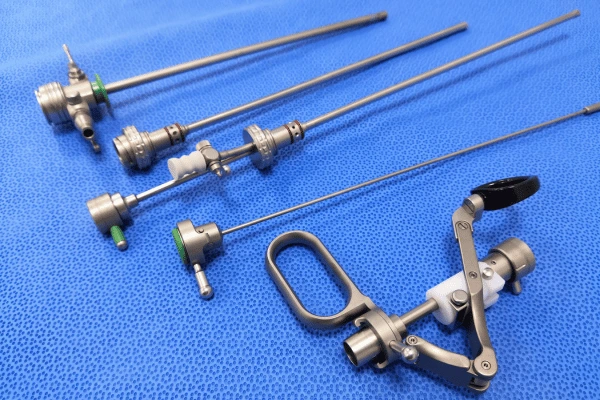
A hysteroscopy is a minimally invasive diagnostic or surgical procedure performed using a hysteroscope. This long, thin optical lens is attached to a camera and used to gain a visual inside of the uterine cavity (similar to how a gastroscopy looks inside the stomach).
A gynaecologist inserts the hysteroscope into the natural opening of the cervix through the vagina; no cuts or incisions are required. It is attached to a light source that illuminates the uterine cavity and to a camera that feeds footage to a screen. It also has the ability to take photographs.
If any surgical procedures are required, they can be performed using long, thin instruments that are inserted through the hysteroscope.
Types of Hysteroscopy
There are a few different types of procedure that may be performed:
- Diagnostic Hysteroscopy: This procedure is used to identify potential structural abnormalities within the uterus that may be causing irregular bleeding or fertility issues. It may also be used to confirm the results of other tests (such as ultrasound).
- Operative Hysteroscopy: This procedure is used to address a detected abnormality, for example removal of a fibroid or polyp.
- Endometrial Ablation: This procedure is sometimes used to manage heavy periods and involves removing the uterine lining (endometrium).
While diagnostic and operative hysteroscopies are generally performed together, a second procedure may occasionally be required.
Why Might I Need a Hysteroscopy?
A hysteroscopic procedure may allow your specialist to visually diagnose issues in the uterine cavity, as well as perform small surgical procedures if treatment is required.
There are several situations that your Gynaecologist may suggest a hysteroscopy, including:
- Heavy menstrual bleeding
- Post-menopausal bleeding
- Abnormal uterine bleeding and/or spotting between periods
- Infertility
- Recurrent miscarriage
- Retained product after miscarriage
- Uterine septum (a malformation of the uterus)
- Endometrial biopsy
- Adhesions, also known as Asherman’s Syndrome (scar tissue)
- Uterine fibroids (usually submucosal)
- Endometrial polyps
- Retained intrauterine contraceptive devices
Think a hysteroscopy may help get to the bottom of your uterine issue? Create Health is here to help.
What Are the Potential Risks of a Hysteroscopy?
Overall, hysteroscopy is a low-risk procedure. However, even minimally invasive procedures come with some potential risks to be aware of. These include:
- Bleeding
- Infection
- Pain and discomfort
- Uterine perforation, with potential damage to surrounding organs (such as the bladder or bowel)
It is important to note that perforation (when the instrument has been inserted too deeply into the uterine cavity) is rare.
Frequently Asked Questions
Is anaesthesia used during a hysteroscopy?
Hysteroscopies may be performed under local or general anaesthetic, depending on doctor and patient preference. More commonly hysteroscopies are performed under general anaesthetic.
How long does the procedure take?
The procedure typically takes between 10 and 30 minutes, depending on the reason for the procedure and whether it is diagnostic or also operative.
What is recovery like after a hysteroscopy?
Most people recover well after a hysteroscopy, and you will generally be discharged two to four hours after the procedure. You may experience pelvic pain, cramping, bleeding, or discomfort for a few days (similar to a regular period). Do not drive, operate heavy machinery, or do any heavy lifting or exercise for 24 hours, and avoid sexual intercourse for seven days.
How do I prepare for hysteroscopic surgery?
Leading up to your procedure, you may be asked to have blood tests (to ensure there aren’t any health issues that would prevent the procedure from going ahead). You may also be asked to do a vaginal swab (to ensure there is no infection) and use contraception (as you cannot have the procedure if you are pregnant).
Why Create Health?
Care You Understand
Our team can consult in nine different languages, including Malay, Cantonese, Arabic, German, Bahasa Indonesia, and Hindi.
Fertility Specialists
Many of our doctors are also fertility specialists, which gives us the ability to see patients through every step of their fertility journey.
Leading Surgeons
We employ some of Australia’s leading laparoscopic surgeons, treating all manner of conditions (like fibroids and endometriosis).

Helping You Care for Your Uterine Health with Hysteroscopy Melbourne
If you are feeling uncertain about your symptoms or simply want clearer answers about your uterine health, our team is here to support you. A hysteroscopy may be a part of that process, to help you find clarity, reassurance, and a path forward.
You don’t have to navigate the process alone. At Create Health, we take the time to listen, explain your options, and guide you through each step with compassion. Whether you are experiencing abnormal bleeding, fertility concerns, or ongoing discomfort, our specialists are ready to help.